For many years, pelvic health was associated almost exclusively with women. However, men can also develop pelvic floor changes that significantly affect their quality of life, although they often do not seek help because of a lack of awareness or embarrassment.
The truth is that symptoms such as urinary leakage, urinary urgency, persistent pelvic pain or discomfort during certain activities should not be considered normal or inevitable.
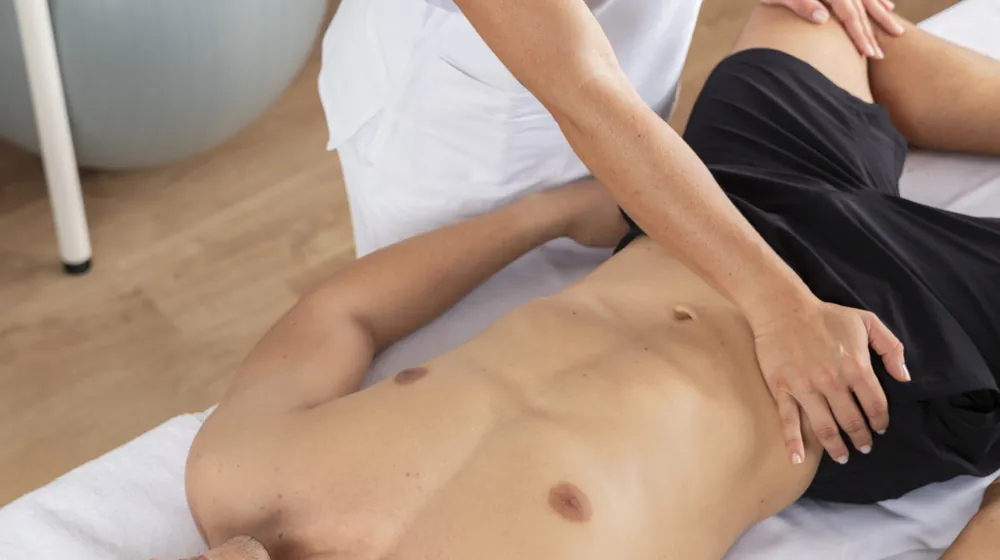
Male pelvic physiotherapy has taken on an increasingly relevant role in the assessment and treatment of these conditions, offering a conservative and personalised approach.
What is the male pelvic floor?
The pelvic floor is a group of muscles, ligaments and tissues located at the base of the pelvis.
Although we rarely think about these muscles, they perform essential functions in everyday life.
They help control:
- Urination
- Bowel function
- Stability of the lower back
- Support of the pelvic organs
- Part of sexual function
When these muscles do not work properly, different symptoms can appear that affect comfort and function.
What are the most common symptoms?
Symptoms can vary considerably between individuals, but some of the most common include:
- Involuntary urinary leakage
- Frequent need to urinate
- A feeling of urinary urgency
- Difficulty emptying the bladder completely
- Persistent pelvic pain
- Discomfort in the perineal area
- A feeling of heaviness or pelvic pressure
Many men live with these symptoms for years without knowing there is a specific area of physiotherapy dedicated to assessing them.
The impact after prostate surgery
One of the contexts in which male pelvic physiotherapy is most often recommended is after prostate surgery.
Depending on the type of procedure, some men may experience temporary or persistent changes in urinary control.
These changes can significantly affect confidence, independence and quality of life.
Recovering pelvic floor function through specific exercises and appropriate strategies can play an important part in this process.
Chronic pelvic pain: a condition that is often misunderstood
Male pelvic pain is a particularly complex area.
In some cases, medical tests do not identify significant changes, but the symptoms continue.
This does not mean the pain is imaginary or unfounded.
Persistent muscle tension, changes in muscle control, the body's protective strategies and factors related to pain sensitisation can all contribute to keeping symptoms going.
For this reason, the assessment should not focus only on the internal organs, but also on the muscular and functional component.
How is the assessment carried out?
The assessment starts with a detailed conversation about symptoms, daily habits and clinical history.
The aim is to understand:
- When the symptoms began
- How they have developed over time
- The impact on quality of life
- Factors that worsen or relieve the discomfort
A functional assessment may then be carried out to identify relevant muscle changes or movement patterns.
Is the treatment the same for everyone?
No.
One of the most important features of pelvic physiotherapy is personalisation.
Two patients with seemingly similar symptoms may need completely different strategies.
In some cases the focus will be on muscle strengthening.
In others, it may be necessary to reduce excessive tension, improve muscle coordination or provide education about certain habits that influence symptoms.
The importance of seeking help early
The longer symptoms persist without appropriate intervention, the more likely they are to affect different areas of life.
Urinary problems, persistent pain or functional discomfort should not be seen as an inevitable consequence of age.
Early assessment makes it possible to identify modifiable factors and develop suitable strategies to improve quality of life and everyday function.