Regular physical exercise is one of the fundamental pillars of maintaining health. We now know that physical activity helps reduce the risk of cardiovascular disease, improves mental health, increases functional capacity and promotes a better quality of life.
However, there is a significant difference between knowing we should exercise and doing it effectively.
Many people start training programmes full of motivation but give up after a few weeks. Others stay active for months without seeing meaningful results. In many of these cases, the problem is not a lack of effort, but a lack of proper guidance.
This is precisely where supervised exercise can make a difference.
Why do so many people give up on exercise?
Most dropouts do not happen because of laziness.
Often there are other factors involved:
- Lack of clear goals
- Unsuitable exercises
- No progression
- Pain during practice
- Lack of motivation
- Unrealistic expectations
- Fear of making existing physical problems worse
Without proper guidance, many people feel they are investing time and energy without getting the return they want.
The risk of following generic plans
With the amount of information available online, it is easy to find training programmes for any goal.
However, what works for one person may not suit another.
Two individuals of the same age can have completely different needs depending on factors such as:
- History of injuries
- Current fitness level
- Occupation
- Level of experience
- Joint limitations
- Personal goals
For this reason, generic programmes do not always produce the best results.
Exercise adapted to each person's reality
One of the great advantages of supervised exercise is personalisation.
Before defining any plan, it is important to understand:
- Current physical condition
- Intended goals
- Existing limitations
- Clinical history
- Daily habits
From this information it becomes possible to build a programme adjusted to each person's reality.
This maximises results and reduces unnecessary risk.
Lower risk of injury
Poor technique can increase the likelihood of developing pain or injury.
Small execution errors repeated hundreds of times can create significant overload over the months.
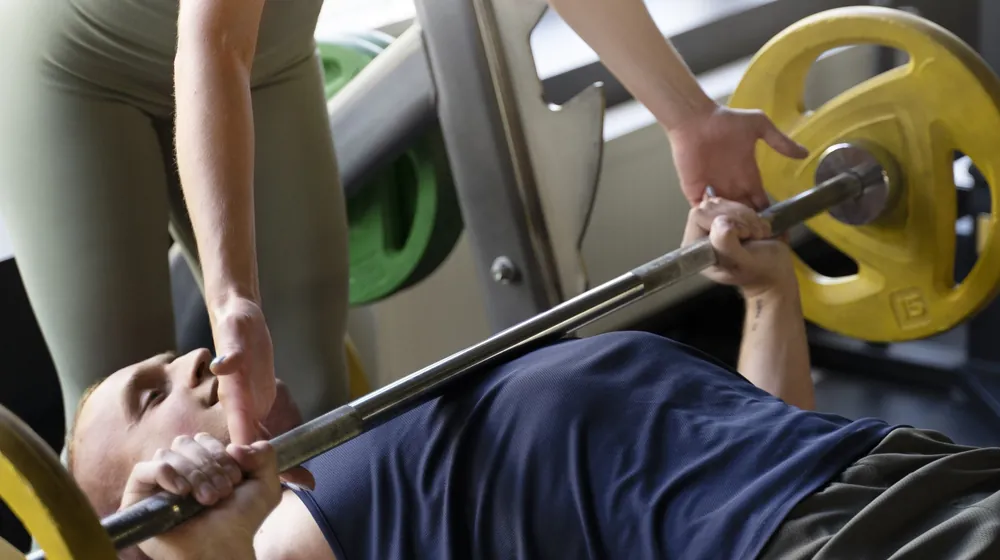
Proper supervision makes it possible to correct movement patterns and adapt exercises when necessary.
In many cases, this guidance prevents problems that could compromise training continuity.
More confidence for people with pain or limitations
Many people avoid exercise because they believe certain physical problems prevent them from being active.
It is common to hear phrases such as:
- "I have back pain, I can't train."
- "I have a weak knee."
- "I've had an injury and I'm afraid of making it worse."
In reality, most of these situations benefit from appropriate, progressive movement.
Supervised exercise offers a safer environment to regain confidence in your body and build physical capacity without excessive fear.
More consistent results in the long term
When there is supervision, it is easier to adjust the plan as the person progresses.
As strength, endurance or fitness improve, exercises can be adapted to keep stimulating progress.
This ability to adapt helps avoid plateaus and keeps motivation up over time.
The importance of adherence
The best exercise programme in the world produces no results if it is not done consistently.
One of the advantages often reported by people in supervised programmes is greater commitment to the process.
Regular guidance helps many people maintain discipline and turn exercise into a sustainable habit.
Exercise is an investment in health
We often associate exercise only with aesthetics or weight loss.
However, the benefits go far beyond that.
Regular physical activity can help to:
- Improve cardiovascular health
- Increase bone density
- Reduce musculoskeletal pain
- Improve mood
- Increase energy levels
- Promote greater independence throughout life
When exercise is adapted to individual characteristics, these benefits become more accessible and sustainable.
The goal is not to train more, but to train better
Many people believe they need to train more hours to achieve results.
In reality, the quality of training is often more important than the quantity.
An adapted, progressive and supervised plan can produce better results than many hours of exercise done without a strategy.
Supervised exercise is not just about having someone count repetitions. It is about building a path adjusted to individual needs, promoting health, confidence and lasting results.