Anyone who exercises regularly knows that injuries can happen even with preparation and experience. A sprain, a muscle injury or a tendinopathy can interrupt training, compromise goals and cause frustration.
However, the biggest mistake often happens after the injury. The eagerness to return quickly to activity leads many people to skip important stages of recovery, significantly increasing the risk of relapse.
Recovering does not simply mean no longer feeling pain. It means regaining the physical capacity needed to return to activity with confidence and safety.
Why do sports injuries happen?
Injuries rarely result from a single factor. In most cases, a combination of elements increases the body's vulnerability.
The most common factors include:
- A sudden increase in training load
- Insufficient recovery between sessions
- Deficits in muscle strength
- Changes in mobility
- Poor technique
- History of previous injuries
- Accumulated fatigue
Often the body gives progressive warning signs before the injury happens. Small discomforts ignored for weeks can end up developing into more significant problems.
What are the most common injuries?
Depending on the sport, certain injuries occur more often.
Sprains
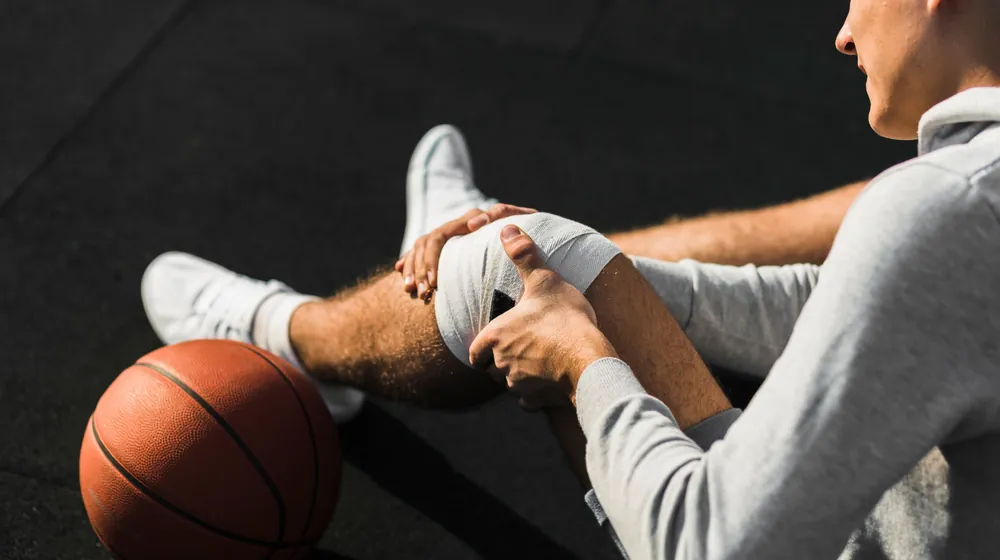
Sprains are particularly common in the ankle and knee.
They can happen during quick changes of direction, jumps or loss of balance.
Although many are considered "simple", inadequate recovery can affect balance and stability and increase the risk of a new injury.
Muscle injuries
These are common in sports involving acceleration, braking or explosive muscle work.
They often affect:
- Calves
- Hamstrings
- Quadriceps
- Adductors
Severity ranges from minor strains to more extensive muscle tears.
Tendinopathies
Unlike traumatic injuries, tendinopathies usually develop gradually.
The tendons most often affected include:
- Achilles tendon
- Patellar tendon
- Rotator cuff tendons
- Elbow tendons
In these cases, pain tends to increase progressively over time.
The most common mistakes after an injury
One of the reasons many injuries come back is mistakes made during recovery.
Returning too soon
The absence of pain does not necessarily mean the tissues are ready to cope with the demands of sport.
In many cases, strength, endurance or stability have not yet been fully recovered.
Too much rest
For many years it was believed that complete rest was the best solution.
We now know that recovery often benefits from appropriate, progressive movement adjusted to the stage of the injury.
Ignoring persistent symptoms
Continuing to train despite recurring pain can turn a simple situation into a condition that is harder to resolve.
Listening to your body's signals remains essential to preventing future problems.
How does the recovery process work?
Each injury has its own characteristics, but there are common principles.
Initial phase
The aim is to control symptoms and protect the injured tissues.
At this stage it is important to find a balance between rest and maintaining function.
Recovering mobility
As symptoms ease, it becomes important to recover normal range of movement.
Excessive stiffness can compromise body mechanics and increase the risk of compensations.
Recovering strength
Progressive strengthening is one of the most important stages.
Muscles need to regain the capacity to respond to the demands of physical activity.
Return to sport-specific movement
Before returning fully to training, it is essential to gradually reintroduce the specific movements of the sport.
Jumping, running, changing direction or lifting weights requires proper preparation to reduce the risk of relapse.
Why is rehabilitation so important?
Many amateur athletes focus only on pain.
However, pain is just one of the indicators of recovery.
Rehabilitation aims to ensure that:
- There is enough strength
- Mobility has been recovered
- Motor control is adequate
- The body once again tolerates the loads demanded by the sport
This approach reduces the risk of new injuries and improves performance in the long term.
Can future injuries be prevented?
No strategy eliminates the risk completely. However, there are measures that help reduce it.
These include:
- Appropriate progression of training
- Sufficient recovery
- Strength exercises
- Adequate mobility
- Management of physical load
- Attention to early signs of overload
Prevention should be understood as a continuous process and not just a concern once an injury has appeared.
Recovering well means coming back stronger
An injury should not be seen merely as a setback.
When recovery is done properly, it becomes an opportunity to identify weaknesses, improve physical preparation and reduce the risk of future problems.
The goal should not be just to return to exercise, but to come back with greater safety, confidence and physical capacity.