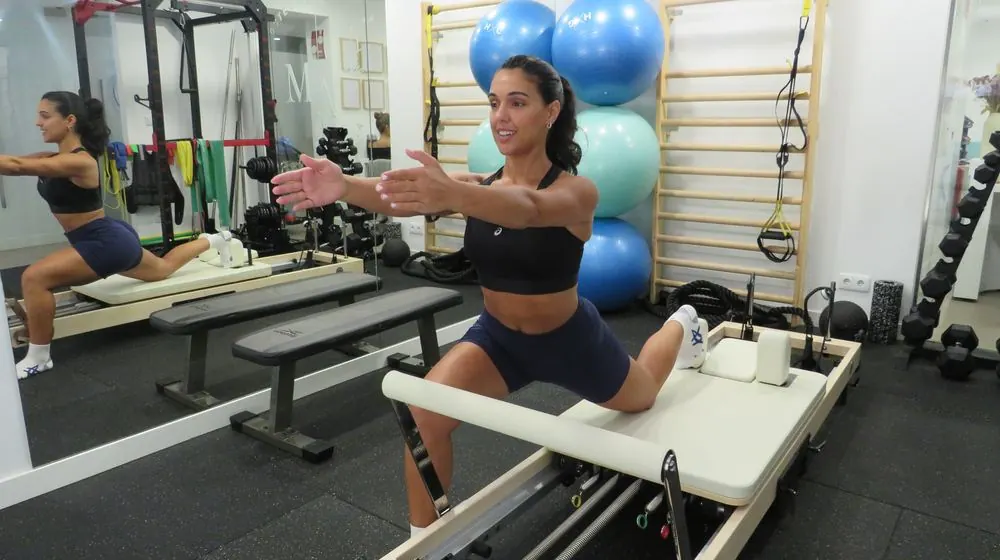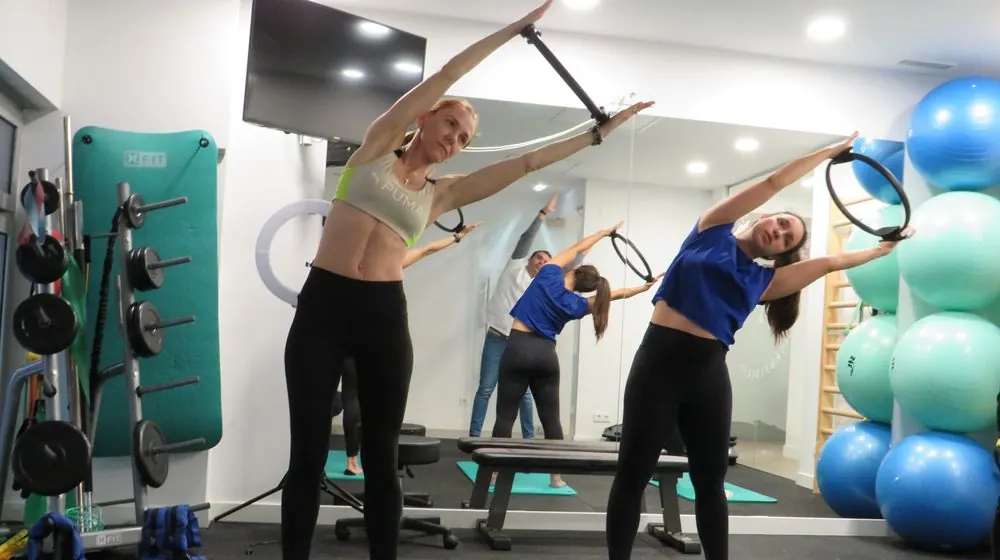
In recent years, Pilates has become one of the most popular forms of exercise for people who want to improve posture, increase flexibility, build strength and promote general well-being.
However, when the term "Clinical Pilates" comes up, many people wonder: is it just another name for traditional Pilates, or is there a real difference?
The answer is yes. Although they share common principles, Clinical Pilates and Conventional Pilates have quite different goals, methods and applications.
Understanding these differences is important to choose the option best suited to each person's needs.
What is Conventional Pilates?
Conventional Pilates is a form of exercise created by Joseph Pilates in the early twentieth century.
It is based on principles such as:
- Control
- Precision
- Breathing
- Concentration
- Fluidity of movement
- Stability of the body's centre
Classes can be done in a group or individually and aim to improve overall fitness.
Many people turn to Conventional Pilates to:
- Gain flexibility
- Improve posture
- Complement other physical activities
- Increase body awareness
- Promote well-being and relaxation
It is an excellent tool for maintaining health and fitness.
What is Clinical Pilates?
Clinical Pilates uses many of the principles of the original Pilates, but with a specific adaptation for rehabilitation and health contexts.
In this case, exercises are selected and adjusted based on a prior assessment of the person's individual needs.
The focus is not only on exercise, but also on correcting functional limitations that may contribute to pain or disability.
It is often used in situations such as:
- Low back pain
- Neck pain
- Injury recovery
- Postural changes
- Post-surgical recovery
- Persistent musculoskeletal problems
The main difference is the assessment
One of the biggest differences between the two approaches is what happens before the exercise begins.
In Clinical Pilates there is usually a more in-depth initial assessment.
Aspects analysed include:
- Clinical history
- Physical limitations
- Mobility
- Muscle strength
- Movement patterns
- Specific goals
The information collected makes it possible to adapt the exercise programme to each person's real needs.
Who should choose Clinical Pilates?
People with pain, injuries or functional limitations tend to benefit from a more individualised approach.
For example:
A person with recurring low back pain may need specific exercises to improve control of the lumbopelvic region.
A person recovering from surgery may need temporary adaptations until they regain adequate strength and mobility.
In these cases, Clinical Pilates offers a more targeted approach.
Conventional Pilates remains an excellent option
It is important to understand that neither form is "better" than the other.
It all depends on individual goals and needs.
People with no significant limitations who are looking for physical activity focused on general fitness can benefit greatly from Conventional Pilates.
The most important thing is to make sure the chosen form matches the person's reality.
Can it help with low back pain?
Low back pain is one of the conditions most often associated with Clinical Pilates.
Work on stability, mobility, strength and body awareness can help improve function and increase confidence in movement.
However, effectiveness always depends on a proper assessment and the right choice of exercises.
Adapted exercise produces better results
One of the most important conclusions is that exercise should not be seen as a universal recipe.
The same exercise that benefits one person may not be the most suitable for another.
This is precisely why individualisation plays such an important role, especially when there are symptoms, limitations or specific goals.
Whichever form you choose, the most important thing is to keep up a regular practice adapted to your body's needs, promoting movement, health and quality of life in the long term.